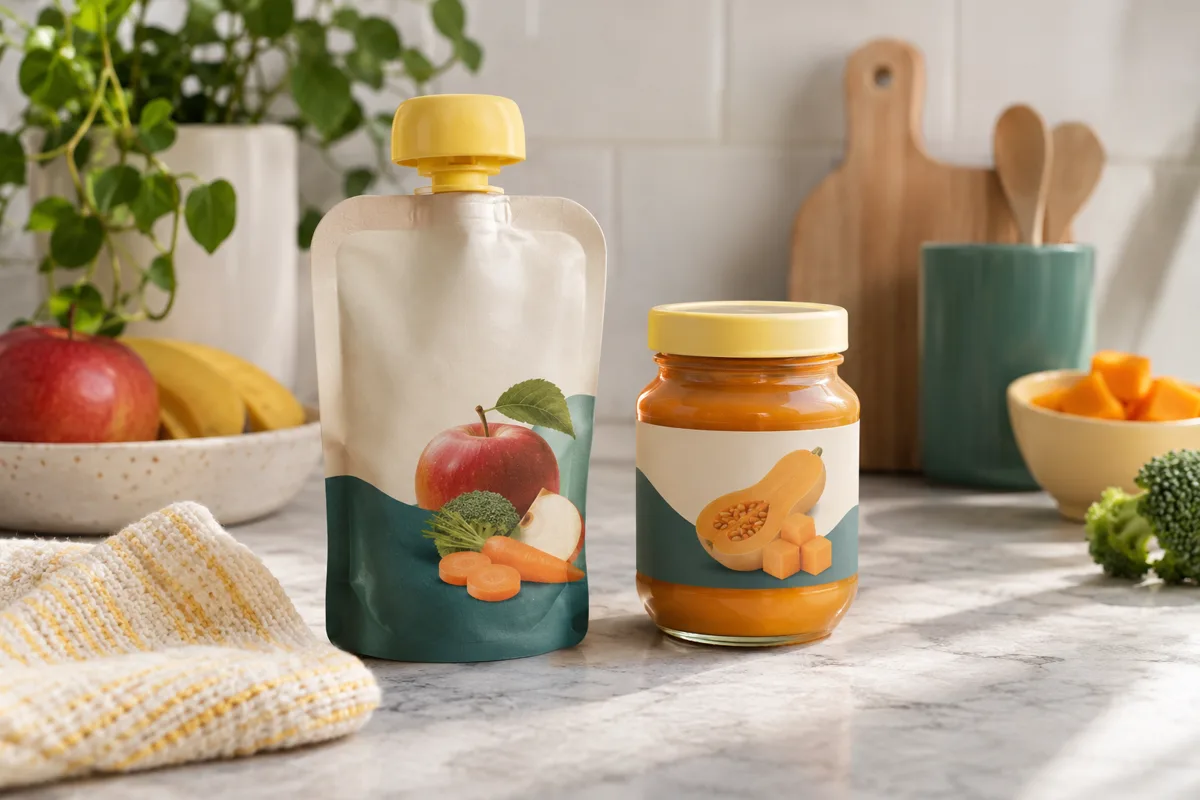
Start with an appropriate food and texture
Container convenience is separate from whether a food and texture suit the child. Use developmental and feeding guidance from the child’s healthcare professional. A front label or squeeze pouch does not by itself establish readiness or remove the need for supervised eating.
Calculate a compatible weight comparison
If one fictional pack contains four 4 oz jars and another contains six 3 oz pouches, their total net weights are 16 and 18 oz. Divide the actual pack prices by those totals for a quantity comparison. These are teaching inputs, not verified offers or portion recommendations.
Check the opening and serving instructions
Look at sealing, storage instructions and how the food will be handled once opened. Do not assume all baby-food products share one after-opening period. Read ingredients and allergen information on the exact product rather than inferring them from a picture of fruit on the front.
Before you decide
- Compare the same product purpose and texture.
- Use total net weight, not container count alone.
- Read current ingredient and storage information.
Sources & scope
Checked November 4, 2026. FDA, CDC, USDA and brand sources support the specific statements. Dated displayed prices are not final checkout quotes, nutritional rankings or recall clearance. This purchase reference does not replace the product instructions or a child’s healthcare professional.
Keep reading
Formula unit prices: dry ounces are not fluid ounces ↗
Baby-snack value: compare net weight, not a serving promise ↗
Three powder-formula listings: dated prices and net-weight arithmetic ↗